3003 Aluminum Coil for Energy Storage System (ESS) Battery Casings – Lightweight, Durable & Thermally Efficient | Mingtai Aluminum
Introduction: The Growing Demand for Reliable ESS Battery Casings
As the world accelerates its transition toward renewable energy, energy storage systems (ESS) have become indispensable infrastructure for stabilizing power grids, storing solar and wind energy, and ensuring reliable backup power. At the heart of every ESS lies a battery pack – and protecting that pack requires a casing that is lightweight, corrosion-resistant, thermally efficient, and structurally reliable.
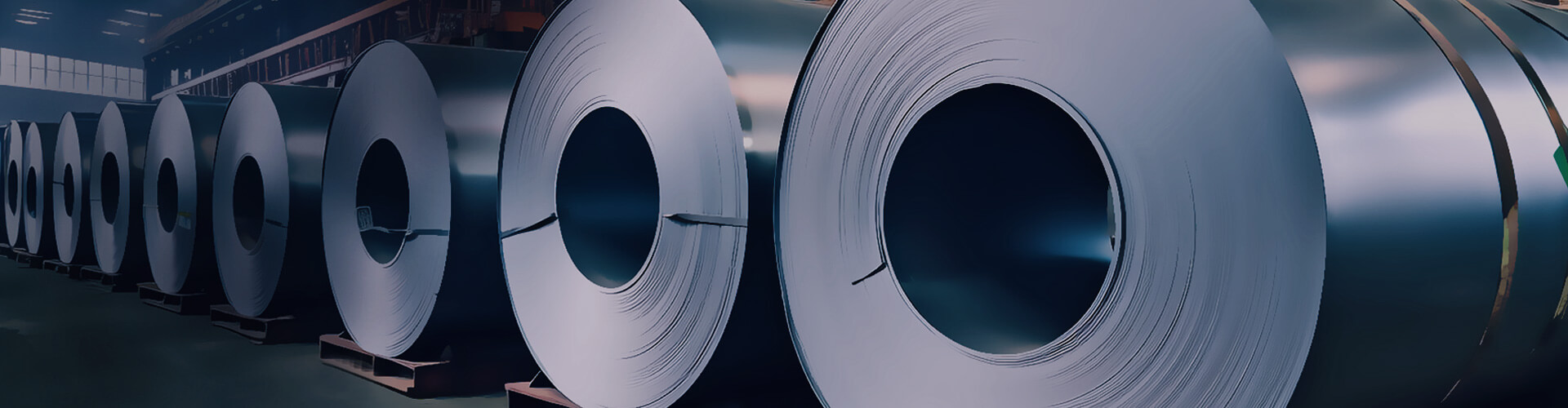
3003 aluminum coil has emerged as the material of choice for ESS battery casings, offering the ideal balance of formability, strength, and durability required for large-scale energy storage applications. Whether for grid-scale storage, commercial battery systems, or residential solar backup, 3003 aluminum delivers the performance that modern ESS demands.
Mingtai Aluminum (Stock Code: 601677), with over 27 years of experience and an annual production capacity exceeding 1.45 million tonnes, supplies premium 3003 aluminum coil specifically engineered for ESS battery casing applications. Our products meet ASTM B209, EN 485, and GB/T 3880 standards, and are trusted by leading energy storage manufacturers worldwide.
Why 3003 Aluminum is the Ideal Choice for ESS Battery Casings
1. Superior Lightweight Performance – Maximizing Energy Density
ESS battery casings must be as light as possible to maximize energy density and reduce structural load requirements. With a density of approximately 2.70 g/cm³ – only one-third that of traditional steel – 3003 aluminum significantly reduces casing weight. This lightweight advantage allows for higher energy storage capacity within the same physical footprint, directly improving system efficiency.
Aluminum ESS battery enclosures can reduce weight by over 60% compared to steel alternatives. Every kilogram saved in casing weight translates into more energy storage capacity and easier handling during installation.
2. Excellent Thermal Conductivity – Critical for Battery Safety
ESS batteries generate significant heat during charge and discharge cycles. Effective thermal management is essential to prevent overheating, thermal runaway, and premature capacity degradation. 3003 aluminum offers thermal conductivity up to 3 times higher than steel, rapidly dissipating heat from battery cells and maintaining stable operating temperatures.
The material’s thermal conductivity reaches approximately 120–237 W/(m·K) , depending on the temper and processing. This efficient heat dissipation extends battery life and enhances overall system safety, particularly crucial for large-scale ESS installations.

3. Superior Corrosion Resistance – Long-Term Durability
ESS battery systems are often installed in harsh environments – coastal areas with salt spray, industrial zones with chemical exposure, or outdoor locations with temperature extremes. As an Al-Mn alloy, 3003 naturally forms a dense, self-protecting oxide layer that provides outstanding resistance to atmospheric corrosion, moisture, and chemical attack.
In accelerated salt spray testing, 3003 aluminum maintains structural integrity significantly longer than industry standards – even in environments with up to 95% humidity. This corrosion resistance ensures ESS battery casings remain leak-free and structurally sound for decades of service, with a service life more than twice that of steel in corrosive environments.
4. Excellent Formability for Complex Casing Designs
ESS battery casings often require intricate, deep-drawn geometries to accommodate prismatic or pouch cell configurations while maximizing space utilization. 3003 aluminum offers outstanding plasticity and ductility, making it ideal for deep drawing, stamping, and forming complex shapes without cracking.
In the O temper (fully annealed), 3003 delivers elongation of 20–30% , allowing single-step deep drawing to form complete battery casings without welded bottom structures. This eliminates potential sealing failure points and simplifies production. 3003-H14 temper provides the optimal balance of strength (145–195 MPa) and formability for most ESS casing applications.
| Temper |
Tensile Strength (MPa) | Yield Strength (MPa) | Elongation | Best Suited For |
| O | 110 – 145 | 40 – 50 | 20 – 30% | Deep-drawn complex shapes |
| H14 | 145 – 195 | 130 – 185 | 4 – 12% | Most ESS casing applications |
| H24 | 125 – 180 | 90 – 150 | 8 – 15% | Higher strength requirements |
5. Outstanding Weldability – Reliable Assembly
ESS battery casings require robust, leak-free joints. 3003 aluminum offers excellent weldability across all common methods, including laser welding, TIG, and MIG welding. Its consistent mechanical properties ensure strong, reliable welds that maintain structural integrity under thermal cycling and mechanical stress.
6. Cost-Effective & Sustainable
Compared to 5052 or 6061 aluminum, 3003 is more economical while still meeting ESS performance requirements. Additionally, aluminum is 100% recyclable without any loss of properties, supporting the circular economy and helping ESS manufacturers achieve sustainability goals.
Applications of 3003 Aluminum Coil in ESS
3003 aluminum coil is widely used across the full spectrum of energy storage applications:
●Grid-scale energy storage systems – Large-format battery enclosures for utility-scale installations
●Commercial and industrial (C&I) battery storage – Behind-the-meter systems for businesses
●Residential solar battery storage – Home battery system enclosures
●Renewable energy integration – Solar and wind energy storage systems
●Telecom and UPS backup power – Critical infrastructure battery protection
●Portable power stations – Lightweight yet durable battery enclosures
Technical Specifications – 3003 Aluminum Coil for ESS Casings
| Parameter |
Specification |
| Alloy | 3003 (Al-Mn) |
| Temper | O, H12, H14, H16, H18, H22, H24, H26, H112 |
| Thickness Range | 0.2 – 10.0 mm (0.8–3.0 mm typical for ESS casings) |
| Thickness Tolerance | ≤±0.05 mm (standard); ±0.02 mm (precision grade) |
| Width | 100 – 2,600 mm |
| Tensile Strength (O) | 110 – 145 MPa |
| Tensile Strength (H14) | 145 – 195 MPa |
| Yield Strength (H14) | ≥145 MPa |
| Elongation (O) | 20 – 30% |
| Elongation (H14) | 4 – 12% |
| Density | 2.70 – 2.73 g/cm³ |
| Thermal Conductivity | ~120 – 237 W/(m·K) |
| Corrosion Resistance | Excellent (natural oxide layer) |
| Standards | ASTM B209, EN 485, GB/T 3880 |
| Certifications | IATF 16949, ISO 9001, ISO 14001 |
Quality Assurance – Why Consistency Matters for ESS
ESS battery casing manufacturing demands exceptional material consistency. Variations in thickness, yield strength, or surface quality can compromise casing integrity, sealing, and long-term reliability.
Mingtai‘s 3003 aluminum coil is manufactured under rigorous quality controls:
●IATF 16949 certified – Automotive-grade quality management
●Precision thickness control – ≤±0.05 mm standard, ≤±0.02 mm for precision applications
●German rolling technology – Advanced six-high cold rolling mills for consistent quality
●100% surface inspection – Ensures bright, clean surface free from scratches, corrosion, and pinholes
●Mechanical properties testing – Every batch verified to meet tensile, yield, and elongation specifications
●Full traceability – Mill test certificates with heat number and production history

Why Choose Mingtai Aluminum for ESS Battery Casing Coil?
●Over 27 years of aluminum experience – Publicly traded company (Stock Code: 601677) with dedicated new energy materials production lines
●Proven ESS performance – Lightweight strength, excellent thermal conductivity, and superior corrosion resistance
●Precision manufacturing – Thickness tolerance within ±0.05 mm, advanced six-high cold rolling technology
●Full range of tempers – O for deep drawing, H14 for balanced strength and formability, H24 for higher strength
●Excellent deep drawing capability – Supports single-step integrated casing forming
●Superior thermal management – 3× better heat dissipation than steel
●Long service life – 2× longer corrosion resistance than steel in harsh environments
●IATF 16949, ISO 9001, ISO 14001 certified – Automotive-grade quality management
●Flexible ordering – MOQ 3 tonnes; free sample testing available
●Fast delivery – 7–45 days to over 150 countries
Conclusion
For ESS manufacturers seeking a reliable, high-performance battery casing material that combines lightweight strength, superior thermal conductivity, excellent corrosion resistance, and exceptional formability, 3003 aluminum coil from Mingtai Aluminum delivers the comprehensive performance that modern energy storage systems demand. With over 27 years of aluminum expertise, advanced manufacturing capabilities, and full international certification, Mingtai is your trusted partner for ESS battery casing solutions.
Contact Mingtai Aluminum today for free samples, technical data sheets, or a factory-direct quotation for your ESS battery casing project.
FAQ – 3003 Aluminum Coil for ESS Battery Casings
Q1: What thickness of 3003 aluminum coil is typically used for ESS battery casings?
A: Typical thickness ranges from 0.8 mm to 3.0 mm, depending on the specific battery design and structural requirements. Larger ESS installations may use thicker gauges for enhanced rigidity.
Q2: What is the difference between O temper and H14 temper for ESS casing applications?
A: O temper (fully annealed) offers maximum formability (elongation 20–30%) and is ideal for deep-drawing complex casing shapes in a single step. H14 temper (half-hard) provides higher strength (tensile 145–195 MPa) with good formability, making it the most widely used temper for ESS battery casing applications.
Q3: Why is thermal conductivity important for ESS battery casings?
A: ESS batteries generate significant heat during charge and discharge cycles. Poor thermal management can lead to overheating, reduced battery life, and safety risks. 3003 aluminum offers up to 3× higher thermal conductivity than steel, rapidly dissipating heat and maintaining stable operating temperatures.
Q4: How does 3003 aluminum compare to steel for ESS battery casings?
A: 3003 aluminum is approximately one-third the weight of steel (2.70 vs 7.85 g/cm³), offers 3× higher thermal conductivity, and provides superior corrosion resistance with a service life more than twice that of steel in corrosive environments. It is also 100% recyclable.
Q5: Does 3003 aluminum provide adequate strength for ESS battery protection?
A: Yes. 3003-H14 offers tensile strength of 145–195 MPa and yield strength of ≥145 MPa, providing sufficient structural integrity to protect battery cells under mechanical stress, vibration, and thermal cycling.
Q6: Can 3003 aluminum coil be welded for ESS casing assembly?
A: Yes. 3003 aluminum offers excellent weldability across all common methods, including laser welding, TIG, and MIG welding, ensuring strong, reliable joints.
Q7: What certifications does Mingtai hold for ESS materials?
A: Mingtai is IATF 16949 (automotive-grade quality management), ISO 9001, and ISO 14001 certified. Products meet ASTM B209, EN 485, and GB/T 3880 standards.
Q8: What is the minimum order quantity?
A: MOQ is 3 tonnes. Sample quantities are available for validation.
Q9: How is the coil packaged for shipment?
A: Coils are packaged with moisture-proof wrapping, edge protectors, and optional interleaving to protect the surface during transit.
Q10: Can Mingtai supply 3003 aluminum coil in custom sizes for specific ESS casing designs?
A: Yes. Mingtai offers custom thicknesses, widths, and lengths to meet your specific ESS casing design requirements.

Mingtai Aluminum – New Energy & ESS Materials Division
Phone: +86-17760728273
Email: sales@mingtai-al.com
Website: www.mingtaialuminum.com
Factory Address: Gongyi City Industrial Agglomeration Area, Henan, China