3003 Aluminum Sheet for EV Battery Tray – Lightweight, High-Formability & Corrosion-Resistant Solution | Mingtai Aluminum
Introduction: The Critical Role of Battery Trays in Electric Vehicles
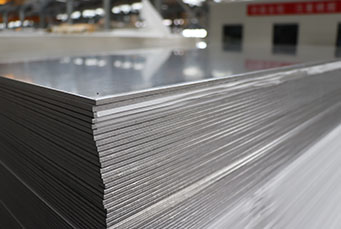
The battery tray (or lower battery box) is the structural foundation of every electric vehicle battery pack. It must support the weight of hundreds of kilograms of battery cells, withstand road vibration and impacts, provide thermal management, and protect the battery from moisture and debris—all while contributing to the vehicle’s lightweight design. As the global EV market continues to expand, the demand for reliable, high-performance battery tray materials has never been greater. 3003 aluminum sheet has emerged as the preferred material for EV battery trays, offering the ideal balance of lightweight strength, excellent formability, superior corrosion resistance, and cost-effectiveness.
3003 aluminum alloy belongs to the 3xxx series Al-Mn (aluminum-manganese) family, with manganese content precisely controlled between 1.0% and 1.5%. This composition delivers a unique combination of properties: it is stronger than pure aluminum (1000-series), easier to form than 5xxx and 6xxx alloys, and offers excellent corrosion resistance and weldability. The material is widely recognized as the “general-purpose” aluminum alloy for new energy applications, perfectly balancing performance and production cost.
Mingtai Aluminum (Stock Code: 601677), with over 27 years of experience and an annual production capacity exceeding 1.45 million tonnes, supplies premium 3003 aluminum sheet specifically engineered for EV battery trays and enclosures. Our products meet ASTM B209, EN 485, and GB/T 3880 standards, and are trusted by leading EV manufacturers worldwide.
Why 3003 Aluminum is the Ideal Choice for EV Battery Trays
1. Lightweight – Extending EV Range
With a density of approximately 2.73 g/cm³—roughly one-third that of steel—3003 aluminum significantly reduces battery tray weight. Industry data shows that for every 100 kg of weight reduction, an EV‘s range can improve by 10–15%. A lighter battery tray directly translates to higher energy efficiency and extended driving range. Leading EV manufacturers have achieved battery box weight reductions of up to 15% by optimizing designs with 3003 aluminum sheet.
2. Excellent Formability – One-Piece Deep Drawing
EV battery trays often require complex geometries with deep drawn cavities to accommodate prismatic or pouch cells. 3003 aluminum offers outstanding plasticity and ductility, making it ideal for single-step deep drawing—the process used to form seamless battery trays. In the O temper (fully annealed), 3003 delivers elongation of 20–30%, allowing trays to be formed in one piece without welded bottom structures.
The most commonly used tempers for battery trays are 3003-H14 (half-hard, strain-hardened) and 3003-H24 (strain-hardened and partially annealed). H14 offers excellent rigidity for structural frames, while H24 provides slightly better formability for designs requiring deep bending without edge cracking. Both tempers deliver the balance of strength and ductility required for high-volume stamping production.

3. Superior Corrosion Resistance – Long-Term Durability
As an Al-Mn alloy, 3003 aluminum naturally forms a dense, self-protecting oxide layer on its surface. This oxide film provides outstanding resistance to atmospheric corrosion, moisture, salt spray, and chemical exposure. Even if the surface is scratched, the oxide layer has a self-healing function, quickly forming a new protective layer. This corrosion resistance ensures that EV battery trays remain structurally sound and leak-free over the vehicle‘s lifetime, even in harsh environments.
4. Excellent Weldability – Reliable Assembly
3003 aluminum offers excellent weldability across all common methods, including argon arc welding and resistance welding. Welded joints are strong, durable, and resistant to cracking, facilitating efficient assembly and reducing production costs. The material is also compatible with friction stir welding (FSW), which is increasingly used for battery tray assembly.
5. High Thermal Conductivity – Efficient Heat Dissipation
EV batteries generate significant heat during charging and high-power discharge. 3003 aluminum‘s excellent thermal conductivity helps dissipate heat from the battery pack, maintaining stable operating temperatures and reducing the risk of thermal runaway. This thermal management capability is critical for battery safety and longevity.
6. Cost-Effective – Balanced Performance and Economy
Compared to 5xxx and 6xxx series alloys, 3003 aluminum offers a more cost-effective solution for battery tray applications. It provides sufficient strength and durability at a lower material cost, with better formability and higher production yields. This balanced performance makes 3003 the preferred choice for high-volume EV battery tray production.
Technical Specifications – 3003 Aluminum Sheet for EV Battery Trays
| Parameter |
Specification |
| Alloy | 3003 (Al-Mn) |
| Tempers | O, H12, H14, H16, H18, H22, H24, H26 |
| Thickness Range | 0.8 – 3.0 mm (1.0–2.0 mm typical for battery trays) |
| Thickness Tolerance | ±0.02 – 0.05 mm |
| Width | 100 – 2,650 mm |
| Tensile Strength (H14) | 120 – 160 MPa |
| Yield Strength (H14) | ≥85 MPa |
| Elongation | ≥5% |
| Density | 2.73 g/cm³ |
| Hardness (Brinell) | 45 – 55 HB |
| Thermal Conductivity | Excellent |
| Corrosion Resistance | Excellent (natural oxide layer) |
| Standards | ASTM B209, EN 485, GB/T 3880– |
| Certifications | IATF 16949, ISO 9001, ISO 14001 |
Applications in EV Battery Systems
3003 aluminum sheet is widely used across EV battery systems:
●Battery trays (lower boxes) – Structural foundation supporting the entire battery pack
●Battery enclosures and housings – Protective casings for battery modules
●Battery cover plates – Upper sealing components
●Battery water cooling plates – Thermal management system components
●Battery compartment dividers – Internal structural separation
●Battery pack side panels – Protective side structures

Quality Assurance – Why Consistency Matters for EV Battery Safety
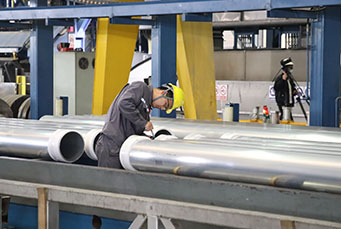
EV battery tray manufacturing demands exceptional material consistency. Variations in thickness, yield strength, or surface quality can compromise tray integrity, sealing, and battery safety. Mingtai‘s 3003 aluminum sheet is manufactured under rigorous quality controls:
●IATF 16949 certified – Automotive-grade quality management
●Precision thickness control – Consistent wall thickness for reliable forming
●100% surface inspection – Bright, clean surface free from scratches, corrosion, and pinholes
●Mechanical properties testing – Every batch verified to meet tensile, yield, and elongation specifications
●Advanced production equipment – German rolling technology for consistent quality
●Full traceability – Mill test certificates with heat number and production history
Why Choose Mingtai Aluminum for EV Battery Tray Sheet?
●Over 27 years of aluminum experience – Publicly traded company (Stock Code: 601677) with dedicated new energy materials production lines
●Proven EV battery tray performance – 3003 aluminum is the industry standard for battery trays and enclosures
●Full range of tempers – O for deep drawing, H14 for structural strength, H24 for balanced formability
●Excellent deep drawability – Supports one-piece tray forming without welded bottoms
●Superior corrosion resistance – Self-healing oxide layer for long-term durability
●Cost-effective solution – Balanced performance and economy for high-volume production
●IATF 16949, ISO 9001, ISO 14001 certified – Automotive-grade quality management
●Flexible ordering – MOQ 3 tonnes; free sample testing available
●Fast delivery – 7–45 days to over 150 countries
Conclusion
For EV battery tray manufacturers seeking a reliable, high-performance material that combines lightweight strength, excellent formability, superior corrosion resistance, and cost-effectiveness, 3003 aluminum sheet from Mingtai Aluminum delivers the comprehensive performance that modern electric vehicle battery systems demand. With over 27 years of aluminum expertise, advanced manufacturing capabilities, and full international certification, Mingtai is your trusted partner for EV battery tray solutions.
Contact Mingtai Aluminum today for free samples, technical data sheets, or a factory-direct quotation for your EV battery tray project.
FAQ – 3003 Aluminum Sheet for EV Battery Tray
Q1: What thickness of 3003 aluminum sheet is typically used for EV battery trays?
A: Typical thickness ranges from 0.8 mm to 3.0 mm, with 1.0–2.0 mm being the most common for standard EV battery tray applications.
Q2: What is the difference between 3003-H14 and 3003-H24 for battery tray applications?
A: 3003-H14 (strain-hardened, half-hard) offers excellent rigidity for structural frames. 3003-H24 (strain-hardened and partially annealed) provides slightly better formability for designs requiring deep bending without edge cracking.
Q3: Why is 3003 aluminum preferred over 5052 for battery trays?
A: 3003 offers superior formability (elongation 20–30%) for complex tray geometries, while 5052 provides higher strength. 3003 is also more cost-effective and easier to deep draw into one-piece trays.
Q4: Can 3003 aluminum sheet be formed into one-piece battery trays without welding?
A: Yes. 3003 aluminum in O temper offers excellent deep drawability, allowing battery trays to be formed in a single stamping operation without welded bottom structures.
Q5: What is the density of 3003 aluminum?
A: The density of 3003 aluminum is approximately 2.73 g/cm³—roughly one-third that of steel.
Q6: Does 3003 aluminum provide adequate corrosion resistance for EV battery trays?
A: Yes. As an Al-Mn alloy, 3003 aluminum naturally forms a dense, self-protecting oxide layer that provides excellent resistance to moisture, salt spray, and chemical corrosion.
Q7: What certifications does Mingtai hold for EV battery materials?
A: Mingtai is IATF 16949 (automotive-grade quality management), ISO 9001, and ISO 14001 certified. Products meet ASTM B209, EN 485, and GB/T 3880 standards.
Q8: What is the minimum order quantity?
A: MOQ is 3 tonnes. Sample quantities are available for validation.
Q9: How is the sheet packaged for shipment?
A: Sheets and coils are packaged with moisture-proof wrapping, edge protectors, and optional interleaving to protect the surface during transit.
Q10: Can Mingtai supply 3003 aluminum sheet in custom sizes for specific battery tray designs?
A: Yes. Mingtai offers custom thicknesses, widths, and lengths to meet your specific EV battery tray design requirements.

Mingtai Aluminum – New Energy Materials Division
Phone: +86-17760728273
Email: sales@mingtai-al.com
Website: www.mingtaialuminum.com
Factory Address: Gongyi City Industrial Agglomeration Area, Henan, China