3003 H14 vs H22 Aluminum Coil: Which Temper is Best for Deep Drawing?
Introduction: The Temper Decision That Shapes Your Parts
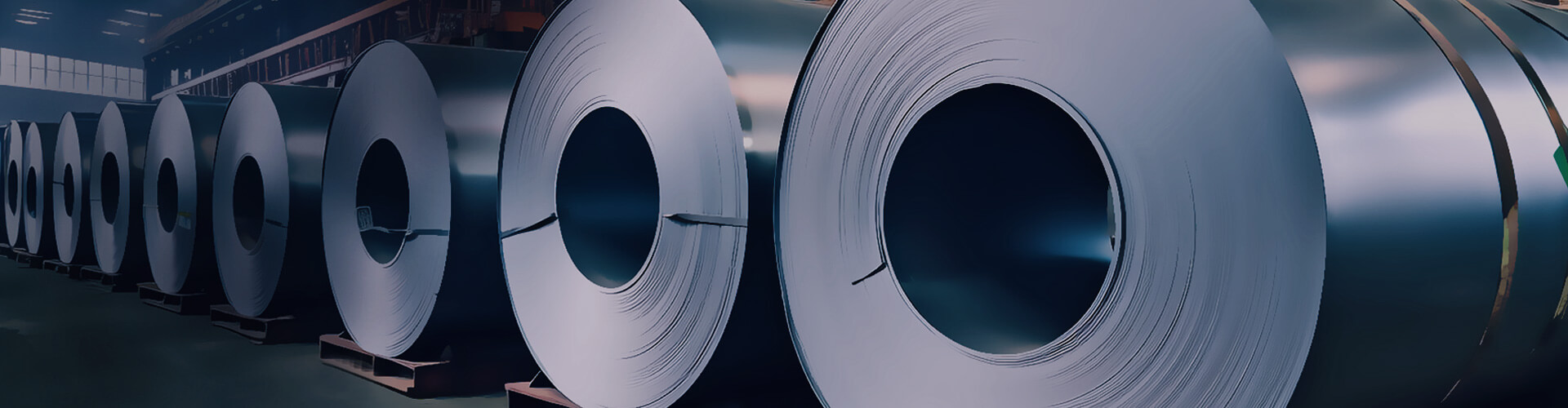
In deep drawing operations, the choice of aluminum temper is one of the most critical decisions you will make. Select a temper that is too hard, and your parts will crack during forming. Select one that is too soft, and they may wrinkle, tear, or fail to hold shape. For 3003 aluminum alloy—one of the most widely used materials for deep drawing applications—the choice often comes down to two tempers: H14 and H22.
3003 aluminum is an Al-Mn (aluminum-manganese) alloy, part of the 3xxx series. It is non-heat-treatable, meaning its strength comes from cold working (work hardening) rather than heat treatment. This makes understanding its temper designations essential for achieving the right balance of formability and strength for your specific application .
Understanding the H Temper Designations
Both H14 and H22 are “H” tempers, meaning they have been strain-hardened (cold worked). However, they represent different levels of work hardening and subsequent treatment.
●3003-H14: The “H14” designation indicates a strain-hardened condition, approximately ½ hard (half hard) . It has been cold worked to achieve a moderate level of strength . It offers a good balance of strength and formability for many applications, including shallow stretch products and parts with moderate strength requirements .
●3003-H22: The “H22” designation is a strain-hardened and partially annealed temper. It undergoes cold working followed by a controlled, partial annealing process. This results in a softer, more ductile material than H14, while still maintaining some strength from the initial cold work. The strength order for 3003 tempers is generally: O < H22 < H14 < H18 .

| Temper | Description | Relative Strength | Relative Formability |
|---|---|---|---|
| O | Fully annealed (softest) | Lowest | Highest |
| H22 | Strain-hardened & partially annealed | Medium | Very High |
| H14 | Strain-hardened (½ hard) | High | Good |
| H18 | Full hard | Highest | Lowest |
Deep Drawing: How H14 and H22 Compare
Deep drawing is a specialized forming process where a flat sheet is drawn into a three-dimensional cup or box shape. The material must flow significantly without tearing or wrinkling. Here is how the two tempers compare for this critical operation:
1. Formability and Ductility
●H22: The partial annealing step in H22 tempers increases ductility and reduces strength compared to H14. This makes H22 a more forgiving material for deep drawing operations, particularly for parts with complex features, tight radii, or aggressive draw depths. Research shows that harder tempers like H24 exhibit significantly lower formability compared to softer tempers like O . H22, being closer to O, will generally have better formability than H14.
●H14: While H14 offers good formability and is suitable for many shallow and moderate deep drawing applications , its higher strength (and lower elongation) makes it more susceptible to cracking under the extreme strains of complex deep drawing. The elongation of H14 is significantly lower than O temper .
2. Springback
Springback is the tendency of a material to partially return to its original shape after forming. It is a major challenge for achieving dimensional accuracy.
●H14: Because it has higher yield strength, H14 exhibits significantly higher springback than softer tempers . This means parts formed from H14 will “spring back” more after being released from the die, requiring careful die compensation or secondary operations.
●H22: The lower yield strength of H22 results in less springback, leading to better dimensional stability and more accurate parts directly from the forming tool .
3. Strength and Structural Integrity
●H14: Where H14 wins is in as-formed strength. If your deep drawn component needs to withstand higher service loads without denting or deforming, H14 provides a stronger starting material. Its tensile strength is typically around 140–180 MPa .
●H22: While strong enough for many applications, H22 will have lower tensile and yield strength than H14.
Summary Comparison:
| Aspect |
3003-H22 | 3003-H14 | Winner for Deep Drawing |
| Formability | Higher (softer, more ductile) | Lower (harder, higher strength) | H22 |
| Springback | Lower (more stable dimensions) | Higher (requires die compensation) | H22 |
| Strength | Lower | Higher | H14 |
| Risk of Cracking | Lower | Higher | H22 |
Application Guide: Which Temper to Choose?
Choose 3003-H22 if your part has:
●Deep, complex draws with tight radii
●Aggressive geometries that risk tearing
●Dimensional stability after forming is critical
●The final part does not require maximum strength
Choose 3003-H14 if your part has:
●Shallow to moderate draws
●A simpler geometry with less severe forming
●Post-formed strength is a priority
●You need a balance of strength and formability for a range of applications
For the most demanding deep drawing, O temper (fully annealed) is often recommended for maximum formability and flexibility . However, H22 provides an excellent middle ground, offering significantly better formability than H14 while retaining more strength than O temper.

Why Choose Mingtai Aluminum for Your 3003 Coil Needs?
●Over 29 years of aluminum experience – Publicly traded company (Stock Code: 601677) with dedicated precision-grade production lines.
●Full range of tempers – O, H12, H14, H16, H18, H19, H22, H24, H26, H28, H111, H112 .
●Wide thickness and width range – Thickness from 0.2 mm to 6.0 mm, width from 20 mm to 2500 mm .
●Proven deep drawing performance – Trusted for prismatic lithium battery shells and complex formed components .
●IATF 16949, ISO 9001, ISO 14001 certified – Automotive-grade quality management.
●Flexible ordering – Free sample testing available.
●Fast delivery – 7–45 days to over 100 countries.
Conclusion
The choice between 3003-H14 and 3003-H22 for deep drawing ultimately depends on the specific demands of your part geometry and required final properties. For complex deep drawing operations where formability and dimensional stability are paramount, 3003-H22 is the superior choice. Its partial anneal condition provides the ductility needed to form intricate shapes while reducing springback, leading to more accurate finished parts. For less demanding draws or parts that require higher post-formed strength, 3003-H14 remains an excellent and widely used option .
FAQ – 3003-H14 vs H22 for Deep Drawing
Q1: Which 3003 temper is softer, H14 or H22?
A: H22 is softer than H14. The partial annealing step in H22 reduces its hardness and strength compared to the strain-hardened H14.
Q2: Which temper has better formability for deep drawing?
A: H22 offers better formability due to its higher ductility and lower yield strength. This reduces the risk of cracking in complex deep drawing operations. H14 is better suited for less demanding draws where higher final strength is needed .
Q3: Does H14 have higher springback than H22?
A: Yes, H14 has significantly higher springback because of its higher yield strength. This means parts formed from H14 are more likely to change shape after being released from the die .
Q4: Is O temper better than H22 for deep drawing?
A: O temper offers the maximum formability and is often recommended for the most demanding deep drawing applications . However, H22 provides a good balance, offering better formability than H14 while still having more strength than O.
Q5: What is the tensile strength of 3003-H14?
A: The tensile strength of 3003-H14 is typically greater than 140 MPa .
Q6: What thicknesses are available for 3003 coil?
A: 3003 aluminum coil is available in thicknesses ranging from 0.2 mm to 6.0 mm .
Mingtai Aluminum – Industrial Aluminum Division
Phone: +86-17760728273
Email: sales@mingtai-al.com
Website: www.mingtaialuminum.com
Factory Address: Gongyi City Industrial Agglomeration Area, Henan, China